
Lafayette, LA · Garage Door Service
Why Lafayette Garage Doors Fail the Way They Do
Lafayette homes mostly date to the 1980s and 90s, with mild winters and occasional freezes. Here's what that combination actually does to garage doors over time.
- Repairs & new doors
- Springs & openers
- Serving 6 nearby communities
What Most People Get Wrong
The biggest mistake we see is treating every garage door problem like it's new. It isn't. Most of the houses we get called to were built somewhere between 1966 and 2011, with the heaviest concentration going up in the 1980s. That means the door, the opener, and the hardware behind it are often original or close to it. Across the 21 subdivisions and areas we work in, the bulk of the housing stock dates to that same 1980s-90s window, so the same door models and the same opener chains are wearing out at roughly the same age, all over town at once.
People hear a grinding noise and assume the opener motor is dying, so they replace the opener. Six months later the real problem shows up: the torsion spring, original to a house built in 1983, was never meant to run that many cycles. Swapping the opener didn't touch the spring, the rollers, or the track mounting bolts that have been working loose since the Reagan administration. The fix has to match the age of the house, not just the symptom you noticed first. At a median household income of $49,419, people also tend to want the cheapest fix available, which is understandable, but patching a door that's past patching usually costs more in total than just doing the job right the first time.
What the Weather Here Does to It
The climate band here is mild with the occasional freeze, which sounds easy on a door compared to someplace with real winters, and in some ways it is. You don't get freeze-thaw heaving that cracks slab foundations and throws tracks out of alignment the way colder regions do. But mild-with-occasional-freeze has its own quiet damage pattern, and it's a slower one.
Humidity sits on steel hardware year-round here, and on a door installed in the 1980s or 90s, forty years of that kind of damp air works rust into the track channels, the hinge pins, and the spring coils from the inside out, not just the surface you can see. Then a few nights a year the temperature drops enough to freeze, and whatever lubricant is left in an old opener chain or a stiff torsion spring goes brittle right when the metal contracts. That's usually the night the spring lets go or the chain skips a tooth. It's not dramatic weather. It's steady humidity doing its work for decades, with a handful of cold snaps each year that finish the job the rust started.
When to Get Help
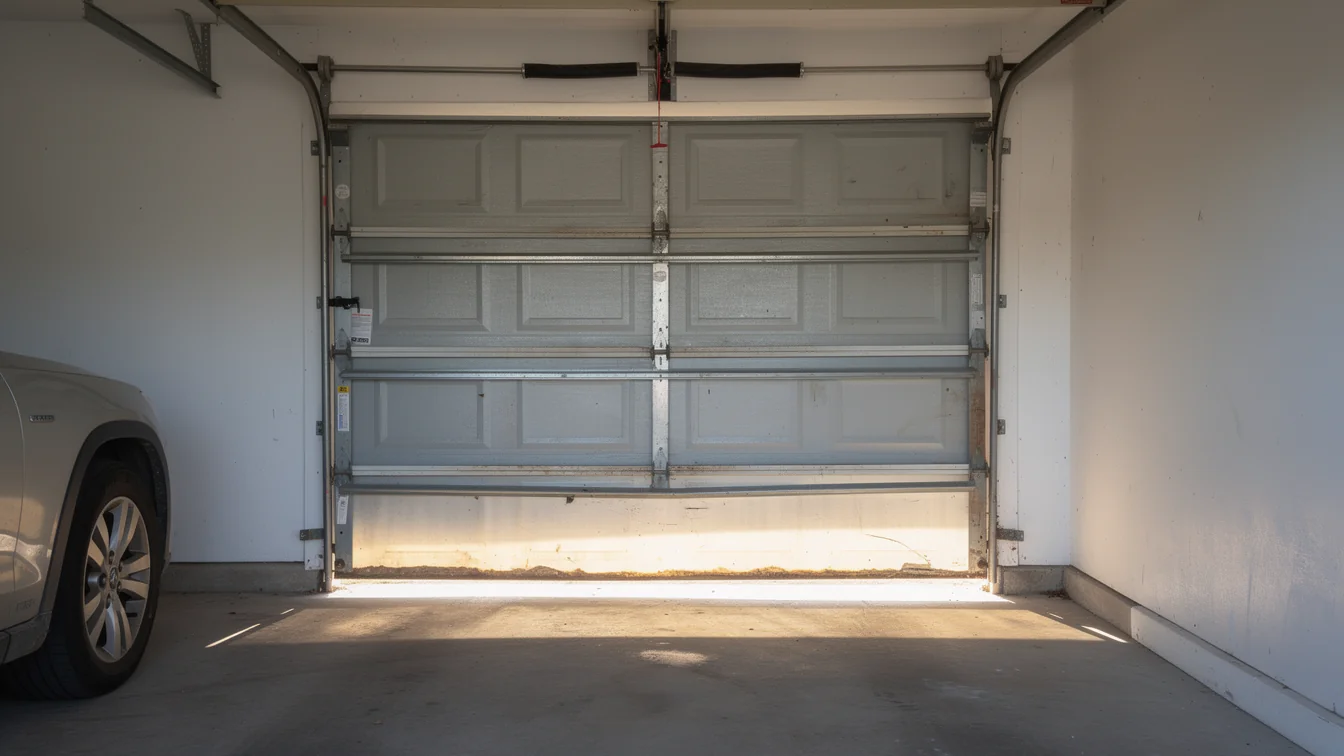
Call before the door won't move at all, not after. A door on a 1980s or 90s build that's starting to sag on one side, or that needs a shove to get moving, is telling you the spring or the cables are near the end, not that the opener needs adjusting. On a two-car door with a single torsion spring, that's a job we don't want anyone doing themselves, old house or new. Loud bangs, visible rust on the spring coils, or a door that reverses itself halfway up are all worth a call the same week you notice them, not the month you get around to it.
One honest limitation: if the door is original to a house built in the 1960s or 70s and the track hardware is no longer made, we may need to source parts, and that can push the timeline out past what you'd want for a same-day fix. We'll tell you up front if that's the situation rather than promising a part we don't have in hand.
The Problem
Here's the actual math. With 28,273 owner-occupied houses across the service area, most of them built in that 1966-2011 window and clustered hard around the 1980s, a huge share of the garage doors out there are old enough that the original springs have already outlived two or three normal service lives. A torsion spring is rated for a set number of open-close cycles, and a door opened twice a day for close to forty years has used that rating up a long time ago, whether or not it's shown any outward sign yet.
That's the gap between how a door looks and what it's actually got left. A door can look fine, paint intact, opener running quiet, right up until the spring snaps on an ordinary Tuesday. Because so much of the housing stock here landed in the same ten or fifteen year window, we see this play out in waves, whole stretches of a neighborhood with doors reaching the same point at close to the same time. It's not bad luck. It's the age of the house catching up with the hardware all at once.
Frequently asked questions
Why is my garage door from the 1980s still working but suddenly making noise?
A door can run quietly for decades right up until a part fails, especially the torsion spring, which doesn't usually warn you before it goes. Noise that's new, especially grinding or popping, is often the spring or the roller bearings finally giving out after thirty-plus years of cycles, not a sign the opener needs a tune-up.
Does the mild winters here mean I don't need to worry about freeze damage?
Not quite. We don't get the freeze-thaw ground heaving that wrecks foundations up north, but the occasional freeze nights we do get can snap brittle lubricant and stiff cables right when humidity-driven rust has already weakened the metal underneath. It's a slower kind of damage, but it's real.
My house was built in the 1980s, is the original door worth repairing or replacing?
It depends on what's failing. A spring, cable, or roller on an otherwise solid door is usually worth repairing. If the track hardware is rusted through or parts for that era aren't made anymore, replacement often ends up cheaper than chasing repairs on a door that's reaching the end of its service life anyway.
Related garage door services in Lafayette
More garage door guides
Book garage door service in Lafayette
Call now or request a quote - tell us what the door is doing and where you are.