
Lafayette, LA · Garage Door Service
Why Older Garage Doors in Lafayette Fail the Way They Do
Most houses in the Lafayette area were built between 1966 and 2011. Here's what actually fails first on an older door, and when replacement beats repair.
- Repairs & new doors
- Springs & openers
- Serving 6 nearby communities
What Most People Get Wrong
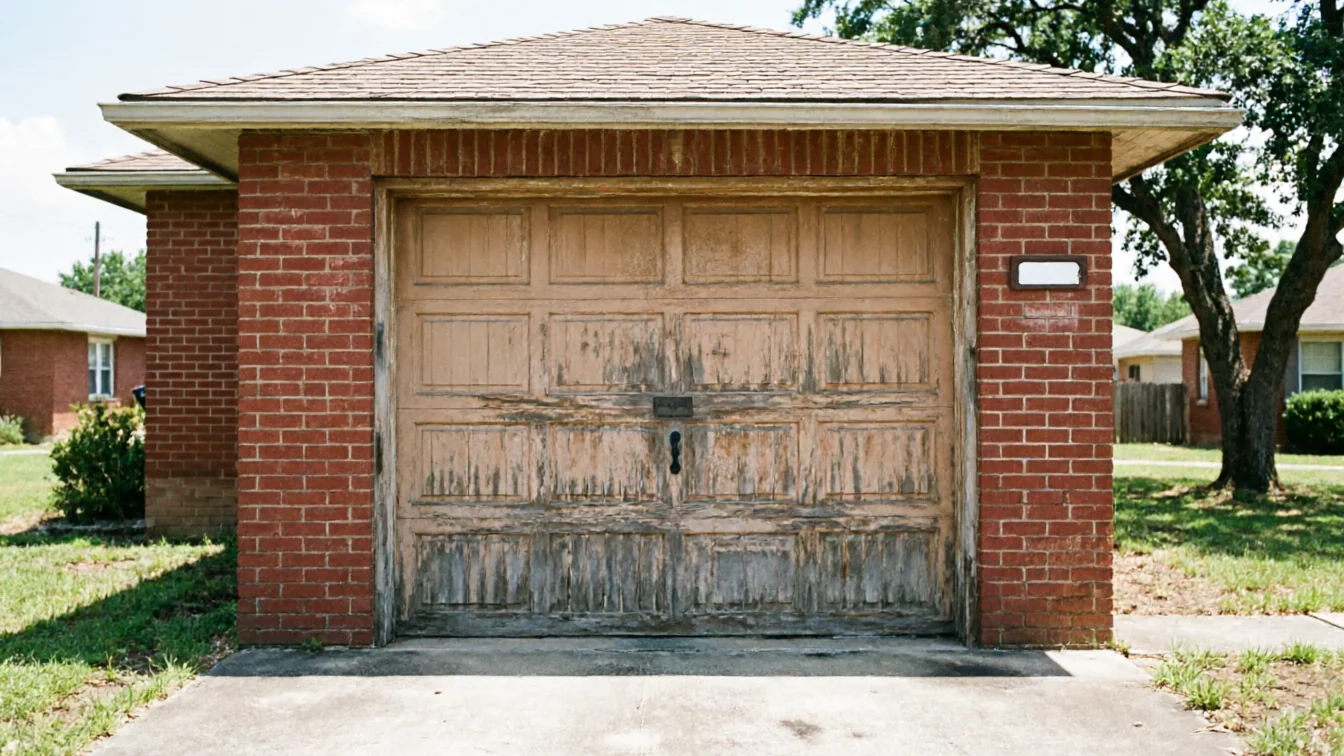
Most houses across this service area went up between 1966 and 2011, with the heaviest build-out in the 1980s and 90s. That's the stock we see across Scott, Broussard, Carencro, Youngsville, and the other named areas within 15 to 20 miles of here. The common mistake is treating a sagging or noisy door as a lubrication problem when the real issue is that the hardware is simply old. A door installed in 1983 was built to standards nobody uses anymore - thinner track gauge, lighter-duty rollers, springs sized for a lower cycle count than modern doors get. Owners spray the hinges, the noise goes away for a month, and the actual wear underneath keeps going. We also see people assume a newer-looking panel means newer hardware. It doesn't. A lot of these homes had a panel swap at some point but kept the original torsion spring and drum setup from the build year. The two don't age at the same rate, and judging the whole system by the paint on the panel is how a spring failure catches someone off guard on a Saturday morning with the car trapped inside.
What the Weather Here Does to It
This area sits in a mild climate band with occasional freezes, not the deep winters that crack wood or the desert heat that bakes seals dry. That works against a door more slowly than people expect. Steady humidity and mild temperature swings don't snap a cable in one event - they work on galvanized coatings and fastener threads year after year, so hardware that's been in place since the 1980s or 90s often shows surface rust at the hinges and bottom bracket well before anything mechanical actually fails. Then an occasional freeze hits, and a spring that was already fatigued from decades of slow corrosion loses its last bit of give right when the metal contracts. That's usually the night it breaks. It's not dramatic weather causing dramatic failure - it's ordinary weather doing ordinary damage to hardware that's old enough to have been through 30 or 40 years of it. Newer doors on the same street hold up fine against the same conditions because the coatings and seals haven't had time to wear down yet. The age of the house matters here as much as the weather does.
When to Get Help
Call before the spring lets go completely, not after. If a torsion spring on a door from the 1966-2011 building era is original, it's already well past typical service life, and a visible gap in the coils or a door that feels heavier than it used to are both signs it's near the end. The honest limit here: once the track is bent or the drums are worn on a door this old, we often can't source an exact match for the original hardware, and patching mismatched parts onto a 30-plus-year-old system isn't a repair we'd stand behind. At that point replacing the operating hardware, and sometimes the door itself, costs less over time than chasing parts for something that was built before a lot of current owners moved in. If the panels are still sound and it's just springs, cables, or rollers, that's a straightforward repair and worth doing. If the track is racked or the opener is original to a 1980s install and failing electrically, that's the point to stop patching and talk about replacement instead.
The Problem
Across the 51,543 households and 28,273 owner-occupied houses in this service area, median household income sits at $49,419. That number matters here because it shapes the real decision homeowners face: a full door and opener replacement isn't a casual expense for most budgets in this area, so the instinct to keep repairing an old system makes sense right up until it doesn't. The problem is that a lot of these houses are old enough - built in the 1966 to 2011 range, with most construction concentrated in the 80s and 90s - that repair stops being the cheaper option once the spring, track, and opener are all original and all failing around the same time. Fixing one part on a system that old often just means the next part fails a few months later. We'd rather tell an owner that upfront than run up a repair bill piece by piece on hardware that's earned its retirement. The honest math is: one or two isolated failures on an otherwise sound door, repair it. Multiple original components failing close together on a decades-old system, that's a replacement conversation.
Frequently asked questions
My garage door is from the 1980s. Is it worth fixing or should I replace it?
Depends what's failing. If it's one spring or a cable on an otherwise sound door, repair it. If the track, drums, and opener are all original and showing wear at the same time, you're usually better off replacing the system - parts for hardware that old are hard to match exactly, and patched repairs on a 30-plus-year-old setup don't tend to hold.
Does the climate here actually wear out garage door hardware?
Yes, just slowly. This area's mild, occasional-freeze climate doesn't cause sudden damage, but steady humidity corrodes galvanized coatings and fasteners over decades. A spring that's been quietly weakening for 30 years often fails during an ordinary cold snap, not because the weather was extreme but because the hardware was already near the end.
How do I know if my door's hardware is original to the house?
If the house was built in the 1966-2011 range common to this area and you haven't had the track, springs, or opener replaced, assume it's original. A repainted panel doesn't mean new hardware underneath - a lot of homes here had cosmetic panel swaps that left the original spring and drum system in place.
Related garage door services in Lafayette
More garage door guides
Book garage door service in Lafayette
Call now or request a quote - tell us what the door is doing and where you are.