
Lafayette, LA · Garage Door Service
Why Lafayette's Occasional Freezes Break Garage Door Springs
A look at why torsion springs in Lafayette's 1966-2011 housing stock fail during the area's occasional freezes, and what that means for your door.
- Repairs & new doors
- Springs & openers
- Serving 6 nearby communities
What Most People Get Wrong
Most homeowners here figure a mild climate means the garage door doesn't need winter attention. That's backwards. Lafayette sits in a mild band with occasional freeze days, not zero. A door that never deals with real cold doesn't get the slow, steady temperature cycling that keeps spring steel limber. It sits at one tension for months, then gets hit with a sudden drop, and that's a different kind of stress than a door up north sees every week.
The other thing people miss is age. Housing across the service area was mostly built between 1966 and 2011, with the typical house going up around 1983. That means a big share of the torsion springs still on these doors are original or close to it - thirty, forty years of cycling, rust from our humidity, and now a cold snap on top. People think a spring breaking means bad luck. Usually it means the spring was already near the end and the cold was just the trigger. Checking spring age against when the house was built tells you more than any noise the door is making.
What the Weather Here Does to It
Lafayette's climate is mild with some freeze days mixed in, and that combination is harder on a spring than steady cold ever is. Warm, humid stretches let moisture sit on the coil and start rust at the grain level, invisible from the outside. Then a cold snap drops the metal temperature fast, and steel that's already pitted with rust loses flexibility right when it's being asked to flex the most.
This matters more for the 1980s and 90s stock that makes up most of the 21 named areas in the service territory. A spring installed when a house went up in that window has had decades of this freeze-thaw, humidity-rust cycle working on it, not a steady cold that would at least be predictable. The spring doesn't fail because it got cold once. It fails because it was already compromised and the cold found the weak point. That's why the same week of a freeze tends to bring a run of calls - not because cold breaks springs on its own, but because it finishes off ones that were already near the end.
When to Get Help
If a cold morning brings a loud bang from the garage and the door won't open, that's almost always a torsion spring letting go - don't try to lift the door manually with the opener disengaged, since the spring was holding most of the door's weight. A door that's gotten noticeably harder to lift by hand over the past year, especially one in an older part of the service area, is telling you the spring is fatiguing before it snaps outright.
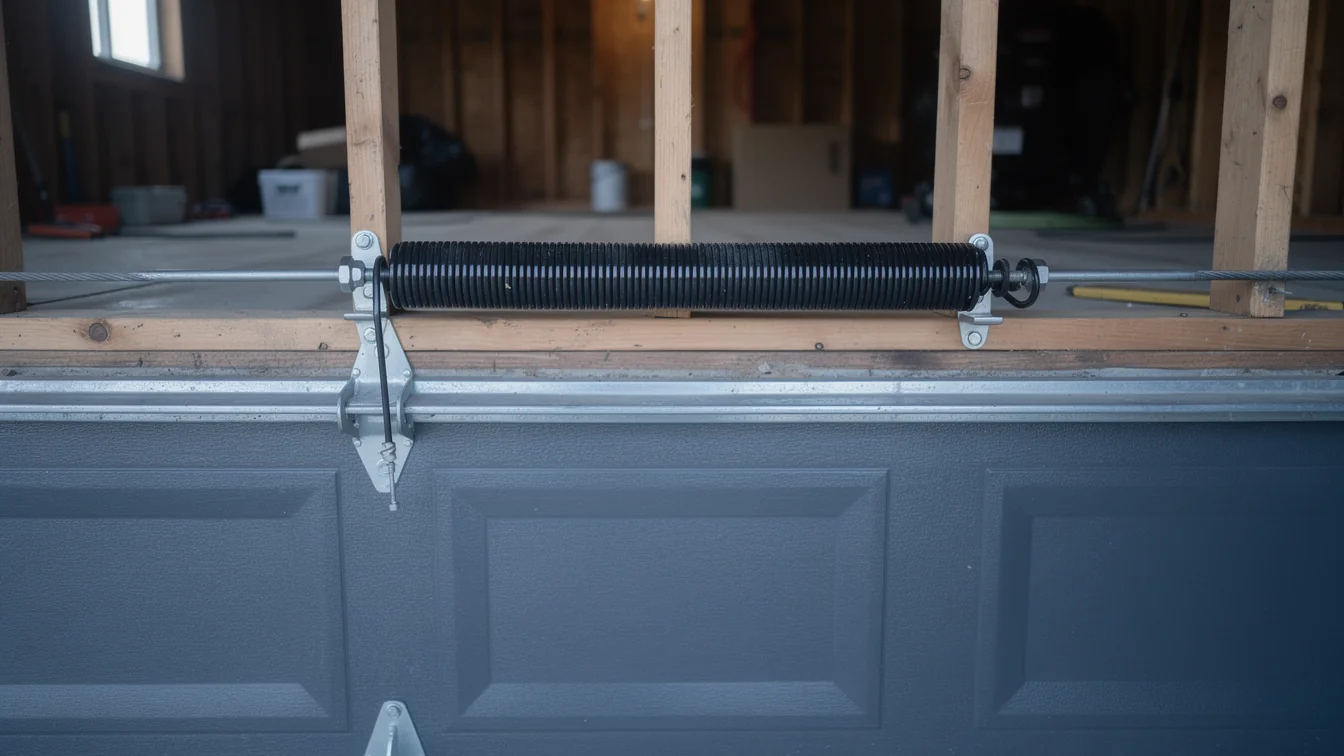
Rust visible on the coils, especially after a humid stretch followed by a cold snap, is worth a look even if the door still works fine. That's the exact combination - moisture damage plus sudden cold - that tends to take out springs in houses from the 1966-2011 build window. If your door is original to a house from that era and you've never had the spring replaced, don't wait for the bang. A spring near the end of its life gives you time to deal with it on a Tuesday afternoon instead of a Saturday morning.
The Problem
Across the service area's roughly 51,543 households and 28,273 owner-occupied houses, a large share were built in that same 1966-2011 stretch, median year 1983. That's a lot of doors running original hardware that's now dealing with decades of humidity and a freeze pattern that's irregular rather than steady. The spring doesn't get conditioned by a real winter, so when a cold snap does hit, it's often the first real stress test that hardware has had in years.
Here's the honest limit: we don't stock every spring size on the truck for every job, and a less common torsion spring sometimes means a short wait on the part rather than a same-visit fix. If your door is original to a house from the 1980s or earlier and you want ahead-of-the-break service rather than an emergency call during the next cold snap, that's worth asking about before the weather forces the issue.
Frequently asked questions
Does Lafayette really get cold enough to break garage door springs?
Yes, even though the overall climate here is mild. The service area sees occasional freeze days, and a spring that's already fatigued from age or rust often fails right when one of those cold snaps hits, not because of the cold alone but because the cold finds the weak point first.
How do I know if my spring is original to the house?
If your house was built in the 1966-2011 range, which covers most of the area, and you've never had a spring replacement done, it's likely original or close to it. A visual check for rust and coil spacing tells more than guessing from the house's age alone.
Can I just replace one spring on a double door?
You can, but if the door has two springs of the same age, the second one is usually close behind the first. We'll tell you honestly when it's worth doing both at once versus waiting on the second.
Why did my spring break on such a cold morning?
Humid stretches followed by a sudden temperature drop are hard on spring steel that's already rusted or fatigued. The cold itself doesn't usually break a healthy spring - it tends to finish off one that was already near the end of its life.
Related garage door services in Lafayette
More garage door guides
Book garage door service in Lafayette
Call now or request a quote - tell us what the door is doing and where you are.